
How to Successfully Complete IGNOU Projects and Dissertations

 Manual
본문
Completing an IGNOU project or dissertation may be overwhelming at first. Many students put off starting because they think it's an overwhelming task with many rules. But, once you've mastered the structure and follow a straightforward step by step approach, it becomes manageable. This guide walks you through the process in terms that are practical to allow you to plan, write, and submit your project without unnecessary stress.
Understanding the Purpose of an IGNOU Project
Before jumping into the work, it's necessary to understand the motivation behind it. IGNOU projects aren't just assignments for you to get marks. They test your ability in analyzing, researching, and present information in a structured manner. It doesn't matter if it's an MBA, MCOM, B.Ed or a different course, the exam will determine how you're able apply the concepts of your course to actual situations.
The dissertation or the project allows you to study a subject thoroughly, develop critical thinking, and present your knowledge about the subject. In many cases an accomplished project could provide a basis to your future job.
Step 1: Choosing the Right Topic
The primary obstacle for students is to choose a topic. Choosing wisely can save hours of work. Your topic should be:
Useful for the course Then make sure it's aligned with your syllabus and the core concepts.
Feasible You should choose a topic that you are able complete in the time frame and resources available.
Interesting: You'll spend weeks researching it, so pick something that keeps you motivated.
For instance, if in the process of pursuing MCOM such topics as "Impact of Digital Payments on Consumer Behavior" or "Role of Microfinance in Rural Development" can be applied as well as researchable.
If you're not sure where to start or stuck, you may consider looking at an IGNOU Solution Project examples online to find inspiration. They're not meant to replace your efforts but they can help you comprehend the structure and scope of the project to ensure success.
Step 2: Understanding the Guidelines
Every IGNOU assignment has specific guidelines, including the word count, formatting and submission rules. Missing even one detail can affect your evaluation. It is recommended to start by downloading an official guide to your class from the IGNOU website. Important points to concentrate on:
Word count: Typically between 3000 - 5000 words depending on the subject.
Formatting Use clear headings, subheadings, as well as the correct page numbering.
Referencing Properly cite all sources. IGNOU likes APA rather than Harvard style.
A submission style The majority of courses require a printed copy along with one that is soft on a CD or pen drive.
Neglecting these rules is a frequent reason why projects are delayed or rejected.
Step 3: Conducting Research
If you've picked a subject first, you must researching. Research is the foundation of every project. Without accurate data and information that are reliable, your project will seem insufficient.
Where to begin:
Materials for studying and reading: Start studying with IGNOU project - Source - textbooks along with the reference books you'll find in your syllabus.
Articles and online journals websites such as Google Scholar, ResearchGate, and JSTOR are able to provide reliable studies.
Interviews and surveys For practical training getting primary data from respondents can add value and create originality.
While you research, keep a simple notebook or a digital file which contains the key points as well as references. This makes writing easier later.
Step 4: Structuring Your Project
One of the most common mistakes students make is jumping straight into writing without planning. A clear structure helps keep the project organized, and readable. This is a typical structure that can be used for all courses:
Title Page This page contains your name along with your enrollment number, course title and.
Acknowledgment Note: Thanks to your instructor fellow students, coworkers, or anyone that has assisted. Be brief and authentic.
Certificate Most courses need certification signed by the guide that confirms the origin of the course.
Abstract An overview of your research, highlighting objectives, methodological aspects, as well as findings.
Introduction In this section, you should explain the history of your research topic, its objectives and research issues.
Literature Review: Recapture existing research or studies in relation to your topic.
Methodology: Describe your method of collecting data, sample size, tools used as well as the methods used to analyze.
Review and Analysis Analysis and Discussion: Present your results clearly. Use tables, charts or graphs when needed.
Conclusion and recommendations Summary: To conclude the research, draw attention to key findings, and offer practical implications.
References list all sources mentioned in a proper format.
Appendices Include survey forms, raw data, or additional material.
The following structure is a way to ensure you don't skip any vital part.
Step 5: Writing the Project
The next step is writing. Keep in mind: the clarity and simplicity of your writing is more important than fancy language. IGNOU examiners prefer simple information that is well-organized over long sentences.
Tips for writing that are effective:
Short paragraphs written with clear headings.
Beware of unnecessary jargon and filler content.
Make charts or tables clear instead of just copying them.
Use examples to clarify complex concepts.
If you're stuck, a look at an IGNOU Solved Project will give you an an idea of the writing style and presentation without copying the content.
Step 6: Reviewing and Editing
Once your draft is finished, don't rush into finalizing your draft. Editing is vital. You should review your project for:
A spelling or grammar mistake.
Formatting consistency.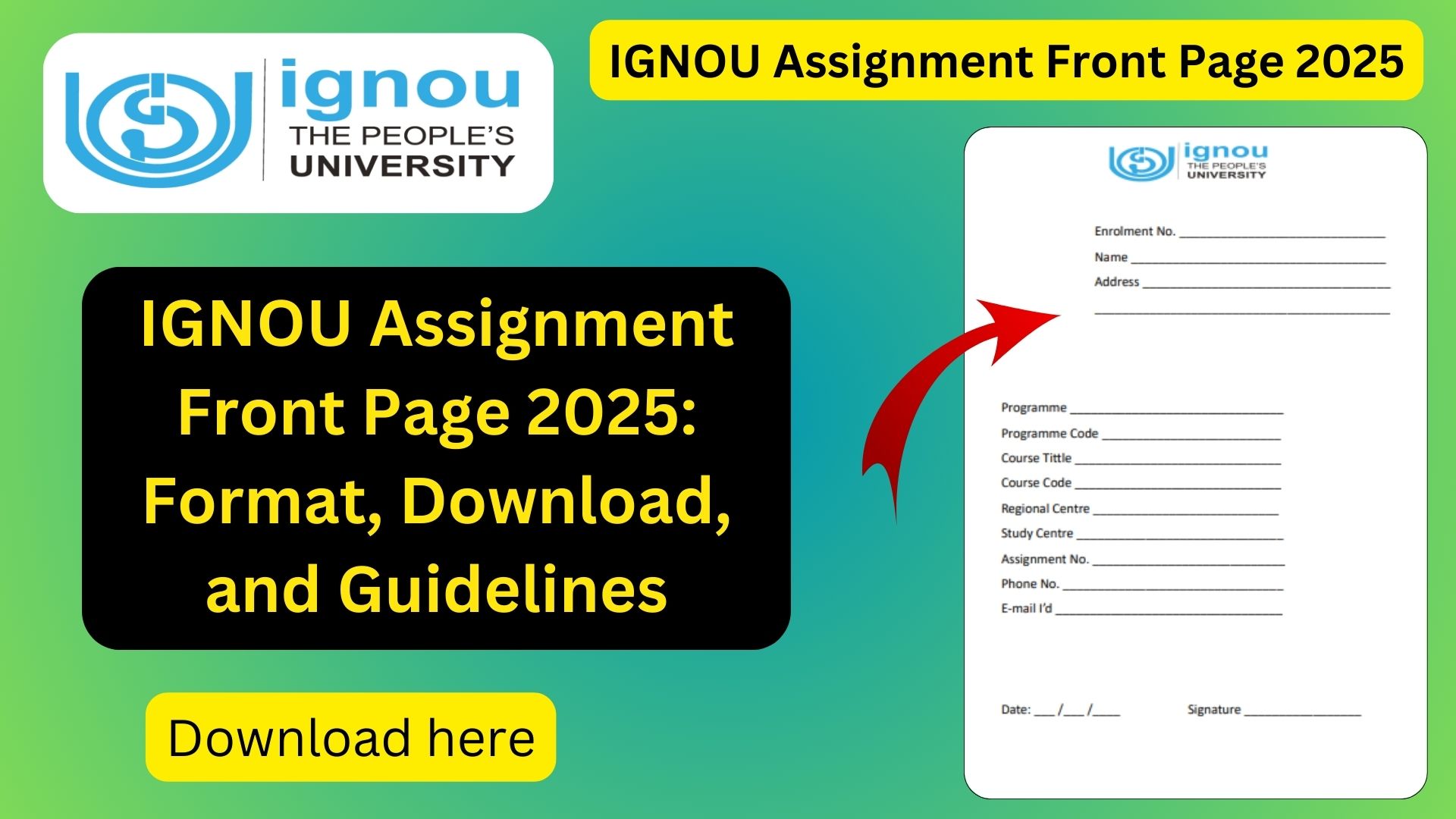
Insight and clarity.
Reliability of information and references.
It's helpful for you to read the piece aloud and ask a friend to review it. Sometimes, minor mistakes become evident when read aloud.
Step 7: Submission Process
IGNOU projects are subject to strict deadlines Submission procedures differ according to the course. Some tips to make it easy
Deadlines for checking Deadlines for submission: Late submissions could result in marks deduction or even rejection.
Create both copies generally, a hard and a printed copy are needed.
Attach all certificates: Make sure your title page, certificate, and acknowledgment page are completed.
Keep a backup Always save the project on Google Drive or pen drive.
After the submission, IGNOU usually takes a couple of weeks to review the project. Once approved, you can continue with your exams or other course requirements.
Step 8: Learning from the Process
Completing a project is not just about marking. It's a chance to gain knowledge. It helps you improve your research skills, time management or analytical ability. The project is viewed as a preparation for academic or professional activities later on.
Many students also discover that starting early even when it's only basic study, can reduce stress and yields better projects overall.
Bonus Tip: Using IGNOU Solved Project as a Reference
Every project has to be unique, going through IGNOU Solved Projects can help you. solved IGNOU Project will assist you by many different ways:
Understanding format and structure.
Finding research methods that are suitable for your topic.
Understanding how to present findings clearly.
The most important thing is to use it as a source, not copy content. The quality of the originality is vital; copying can result in rejection.
Final Thoughts
Writing an IGNOU project or dissertation can be fun and not a hassle. With careful plan, a clear arrangement, and constant work, you'll complete your project with ease and delight in the process. Start early, keep your project organized, and remember that study and presentation can be equally crucial as the content.
Follow these steps in this article--from selecting topics to submission--will reduce time, stress, and help ensure that your work satisfies the requirements of IGNOU. If ever you're in doubt, reviewing an an IGNOU Solved Project can serve as an easy reference to ensure that you're on the right path.
When you choose the right method, your work can become an elucidation of your progress which can boost confidence and a good foundation for your future academic or career endeavours.
댓글목록0